
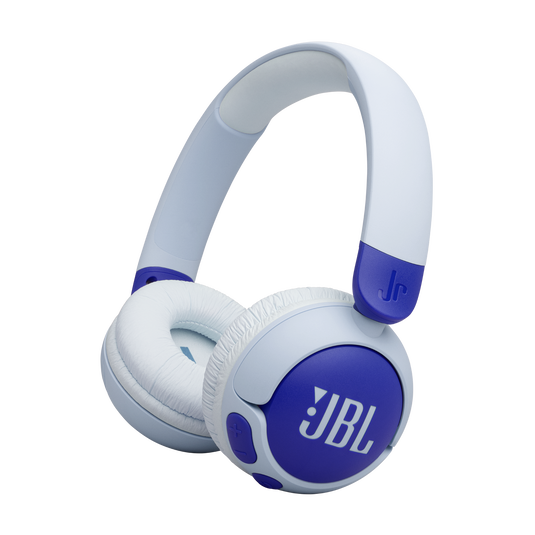
Your needs, this model
Does it fit your priorities?
Is active noise cancellation confirmed for the JBL Junior 320BT?
No inspected exact-model JBL source directly confirms or denies ANC. That uncertainty is retained as unknown, not converted to ANC=false; this reference is excluded from positive ANC matches.
Explore this need in the finder →Can a parent set volume and listening-time limits?
JBL says the Headphones app can set a maximum volume and daily listening-time limit, show usage reports, and protect the settings with a PIN. Treat these as manufacturer-described controls, not a medical guarantee, and confirm the app works on the caregiver's phone.
Does its two-device multipoint claim mean both sources play at once?
No. JBL's quick-start guide says multipoint supports a maximum of two devices; this establishes connection/switching capacity, not simultaneous playback of two audio streams.
Explore this need in the finder →Is the advertised 50-hour maximum an ANC-on runtime?
JBL publishes up to 50 hours with Bluetooth on but does not identify that general figure as ANC-on or ANC-off runtime. Because ANC is unresolved, it cannot satisfy an ANC runtime minimum.
Explore this need in the finder →Should the buyer expect a USB-C charging cable or charging case in the U.S. box?
The current U.S. product page lists a USB-C charging cable, while the English spec sheet lists a USB-C charging case. The sources conflict, and no retail carton was inspected; verify the exact offer's contents and return terms.
This is a research-based model reference, not a hands-on review. JBL identifies the Blue Junior 320BT as a wireless on-ear headphone for children and publishes useful controls and connection details. The manufacturer material I inspected does not directly establish whether this exact model has active noise cancellation. That capability therefore remains unknown—not “no ANC,” and not a reason to recommend it for an ANC requirement.
Why this is a reference entry, not an ANC match
The U.S. product page and the model-specific English specification sheet and quick-start guide consistently identify the Junior 320BT family, its Bluetooth operation and its child-oriented controls. Their feature descriptions do not say that active noise cancellation is present or absent. A missing feature field cannot safely decide that question, and the separately named Junior 470NC is not a substitute source for the 320BT. For a shopper who needs documented ANC, this entry is useful for identifying the model but does not answer that requirement; the finder excludes this reference-only product from positive matches.
The same boundary applies to noise isolation. The available documents do not provide a measured attenuation result, so neither passive isolation nor performance in a classroom, aircraft or other setting is claimed here. Treat the model name and published functions as identification evidence, not a test result.
Parent controls are the clearest documented distinction
JBL describes an automatic maximum-volume limit and app controls for setting a lower maximum and a daily listening-time limit. It also describes real-time or daily and weekly listening reports and a PIN intended to protect settings. These are manufacturer-described controls, not an independent measurement of what reaches a particular child’s ears, a medical safety guarantee, or a replacement for adult supervision. A parent should confirm that the current JBL Headphones app works with the family’s phone and that the settings are configured and protected as intended.
The U.S. page advertises JBL Safe Sound as designed not to exceed 85 dB. That is the manufacturer’s claim; this assessment has not measured output. JBL also describes oversized, child-friendly buttons and a built-in microphone for calls. The controls and monitoring features may be more decision-relevant than the headline runtime for a family comparing basic wireless headphones, but they do not establish ANC.
Bluetooth use and the 50-hour figure
The selected Blue U.S. item is listed as Bluetooth 5.3, with one microphone, a 32 mm driver and a published weight of 124.5 g. JBL lists multipoint connection, and the model’s quick-start guide describes a maximum of two connected devices. This supports switching between paired sources; it does not mean that two audio streams play at once. A built-in microphone supports calls, but the sources do not promise that every app or classroom device will route audio identically.
JBL publishes up to 50 hours of music playback with Bluetooth on and a five-minute charge for up to three additional hours. The figure is a manufacturer maximum, not a measured result from this review. Crucially, the source does not identify it as ANC-on or ANC-off runtime, so it must not be used to satisfy an ANC battery-life threshold. Actual time can vary with settings and use. The documents describe USB-C charging; they do not establish an analog-listening mode or battery-free playback.
Fit, handling and the exact item
JBL calls this a wireless on-ear model, describes an adjustable headband with a 12 mm soft pad and says the headphones fold flat. Those are useful design cues, not a promise that the cups or headband will fit every child. The published 124.5 g figure and 32 mm driver are identification specifications rather than comfort or sound-quality measurements. If considering a particular child, check fit, button reach, clamp comfort and the return terms before relying on a product-page description.
The exact U.S. Blue item is printed as JBLJR320BTBLUAM. JBL also identifies a Purple U.S. item, JBLJR320BTPURAM, within the same Junior 320BT family. Green is more qualified: U.S. support identifies a Green color version, while the separately observed global item is JBLJR320BTGRNAM. That global code is not verified here as a U.S. retail SKU, offer or package. No finish-specific functional difference is established by the sources reviewed.
Check the package instead of guessing
The current U.S. product page lists a USB Type-C charging cable and a sticker sheet in the box. The English specification sheet instead lists a USB Type-C charging case and a sticker sheet. Those statements conflict, and the retail carton was not inspected. Do not assume that “case” means “cable,” or that a particular seller’s offer contains either item. Confirm the exact finish, seller package and return policy directly before buying. The Green regional pages add another reason not to transfer contents across markets: the pictured Green variant is useful for identifying the family, but its U.S. package remains unverified.
Bottom line: Junior 320BT is documented as a child-oriented Bluetooth on-ear headset with app-based volume/time controls, a microphone, multipoint and a generic 50-hour maximum. ANC status and package contents remain unresolved. Use this page to identify the Blue model and understand its documented limits; use an explicitly ANC-confirmed model when active cancellation is a hard requirement.
Key specifications
Key details at a glance
| Fit | On ear |
|---|---|
| Headset weight | 124.5 g |
| Bluetooth version | Bluetooth 5.3 |
| Simultaneous Bluetooth devices | 2 |
Use the exact model’s instructions for operating limits, supplied equipment and version differences.
Sources for this review
Sources for this assessment
- JBL Junior 320BT U.S. product page, Blue selected
- JBL Junior 320BT English specification sheet
- JBL Junior 320BT multilingual quick-start guide
- JBL Junior 320BT U.S. product page, Purple selected
- JBL U.S. product registration, Junior 320BT Green
- JBL global Junior 320BT product page, Green regional item
- JBL Junior 320BT Blue hero image on the exact U.S. item page

Check this model against your routine
Use the finder to test documented connection, ANC and battery requirements together. A match is not proof of personal comfort or measured quiet.