
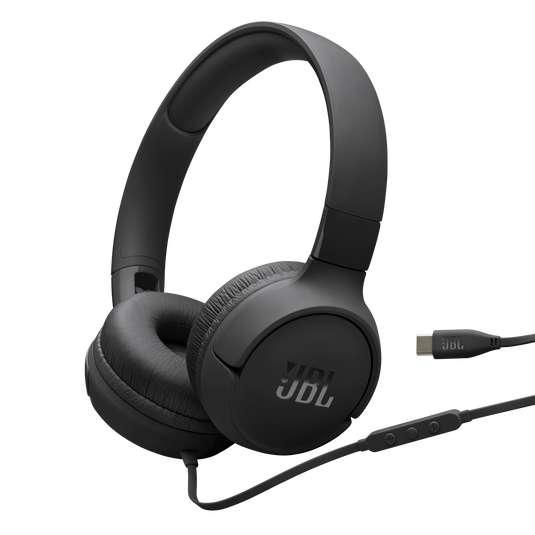
Your needs, this model
Does it fit your priorities?
Is active noise cancellation confirmed for the Tune 520C USB-C?
The inspected exact-model JBL material does not directly confirm or deny ANC. Keep the feature unknown; this reference cannot satisfy a required ANC choice.
Explore this need in the finder →Will any device with a USB-C socket provide audio?
Do not assume so. JBL tells users to check compatibility with the specific phone, computer, tablet or gaming device; its compatibility chart covers tested devices but is not a universal guarantee.
Does it include a 3.5 mm analog connection?
The exact model is documented as wired USB-C audio, and no 3.5 mm path is established in the inspected exact-model material. If the source requires analog, do not treat a USB-C connector or an unlisted adapter as a substitute.
Explore this need in the finder →Can it play with the headphone powered off?
JBL's inspected model page and specification sheet do not establish battery requirements or playback in a power-off mode. Do not infer a battery-free or passive mode from the wired USB-C design.
Explore this need in the finder →This is an evidence-based model assessment, not a listening test. JBL identifies the Tune 520C USB-C as a wired, on-ear headphone with a microphone, three-button remote and EQ presets. It is a digital USB-C configuration, not the Bluetooth Tune 520BT. The exact-model sources reviewed do not directly confirm or deny active noise cancellation (ANC), so this page treats the product as an identification reference rather than an ANC recommendation.
Confirm the exact 520C configuration
The current JBL U.S. Black product page prints item number JBLT520CBLKAM. A separately inspected White page identifies JBLT520CWHTAM. The current model page also shows a Purple selector appearance, but the U.S. Purple item number is not established in the material reviewed here. The selector is evidence that JBL displayed that finish; it is not evidence of a verified U.S. package, offer or stock. Check the full item number, color and region on the offer rather than copying an unverified code.
The 520C name matters. This is a wired USB-C digital-audio model; it should not be confused with a Bluetooth Tune 520BT, the USB-C charging lead on a Bluetooth headphone, or a different JBL wired model. JBL’s exact-model page describes the 520C as USB-C compatible and explicitly tells shoppers to check compatibility with their device. A USB-C socket alone does not prove that a phone, computer, tablet or console routes audio through that port, so verify the actual host and operating system before relying on it.
Controls, cable and published specifications
JBL lists a three-button inline remote with microphone for playback, volume and EQ changes. The manufacturer describes Default, Bass and Vocal presets, and the specification sheet identifies a 120 cm cable. The official product image shows the lead attached to the headphones with its small inline control; the sources inspected do not establish that it detaches or can be replaced independently. The U.S. box list names the headphones and warranty/warning material; it does not list a separate analog adapter.
The model page and sheet list 32 mm dynamic drivers, a 150 g weight, 32-ohm impedance, 10 Hz–40 kHz frequency range and 103 dB sensitivity. JBL also claims Hi-Res 96 kHz / 24-bit audio via its DSP chipset. These are manufacturer specifications and branding claims, not a measured sound-quality result. The host, file, app and output path still matter; a high-resolution claim does not mean every source sends a high-resolution signal.
Foldable construction and a flat, reinforced cable are described by JBL. That gives a shopper concrete details to compare with a bag or desk setup, but it does not prove how the headphones feel over a long session or whether their cable will suit every use. The supplied USB-C lead is a connection to verify with the intended device, not a documented 3.5 mm analog route.
ANC and power behavior are not established
The exact Black product page and linked model sheet document connection, controls, audio processing and technical fields, but they do not directly say whether ANC is present or explicitly say that it is absent. The listed facts therefore leave ANC unknown. A wired USB-C design, the lack of a battery field, or the presence of a digital audio path cannot settle that uncertainty.
For the same reason, this page does not promise battery-free playback, passive listening with power off, or an ANC operating mode. The published USB-C connection establishes the documented route, while power requirements remain unreported in the exact materials inspected. If you require active cancellation, a 3.5 mm fallback or playback in a particular power state, confirm that specific behavior from an exact-model source before relying on it.
Compatibility and purchase checks
JBL publishes a 520C compatibility chart with tested devices and notes that USB-C functionality may vary by device. Use the list as a useful starting point, then verify your own host and the feature you need: digital audio, microphone input, remote buttons or call support. A matching connector does not guarantee that all controls work identically across operating systems and devices.
Before choosing an offer, check that it is the wired 520C USB-C and not the Bluetooth Tune 520BT or a separate USB-C charging version. Match the Black or White item number where supplied; treat the Purple appearance as an unverified U.S. item number unless the listing independently establishes it. Confirm the actual package, return terms and host compatibility. The sources support the model identity and a useful control/audio description, but not a claim that it cancels noise, works with every USB-C device, supplies a 3.5 mm adapter or plays in a battery-free mode.
Key specifications
Key details at a glance
| Fit | On ear |
|---|---|
| Headset weight | 150 g |
| In the box | JBL's U.S. product page lists one JBL Tune 520C USB-C headphone / Warranty/Warning material |
Use the exact model’s instructions for operating limits, supplied equipment and version differences.
Sources for this review
Sources for this assessment

Check this model against your routine
Use the finder to test documented connection, ANC and battery requirements together. A match is not proof of personal comfort or measured quiet.