
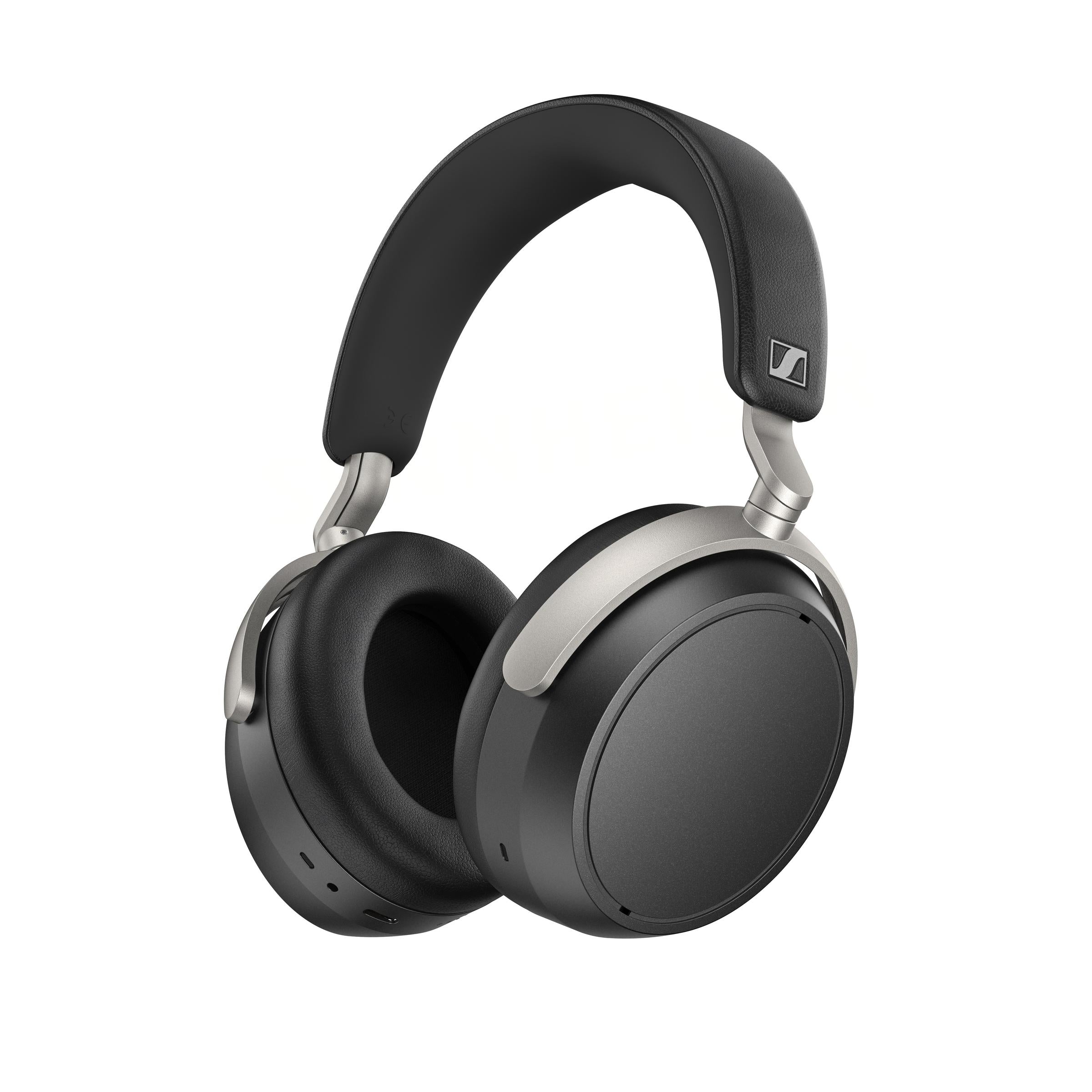
Your needs, this model
Does it fit your priorities?
Can the HDB 630 keep a phone and laptop connected at once?
The HDBT manual says the headphones reconnect to the last two Bluetooth devices, can store up to six device profiles, and play audio from one source at a time. Sennheiser support also describes two simultaneous connections. This is device switching, not a two-source mix; the BTD 700 has its own pairing behavior, so verify the source route you plan to use.
Explore this need in the finder →Can I use the HDB 630 with an analog cable when its battery is empty?
No. Sennheiser's HDB 630 FAQ says the headphones must be switched on for any input because their sound processing is active. The supplied 2.5 mm-to-3.5 mm cable supports a wired source, and ANC works over it while the battery is sufficiently charged, but this is not passive battery-free listening. Check that your source has a compatible headphone output or adapter.
Explore this need in the finder →Does the HDB 630's long ANC-on rating stay the same in high-resolution Bluetooth mode?
No. Sennheiser rates standard-resolution Bluetooth playback with ANC up to 60 hours, but lists up to 45 hours when using aptX Adaptive at 24-bit/96 kHz through the BTD 700. The finder compares the standard-resolution maximum only; choose a lower threshold and leave charging margin if high-resolution mode matters to you.
Explore this need in the finder →The HDB 630 is an over-ear noise-cancelling headphone built around a more complicated question than “does it have ANC?” It offers Bluetooth, USB-C digital audio and an analog cable, plus a USB-C Bluetooth transmitter in the standard package. The trade is that its best-documented routes depend on an energized headset: Sennheiser says the HDB 630 must be switched on for every input, so the included analog cable is not a backup for a drained battery. This is a source-based assessment of the U.S. Black listing, not a hands-on test or a measurement of sound or noise reduction.
Pin down the version before comparing it
The U.S. product page identifies the Black HDB 630 as store SKU 700445; the instruction manual identifies the headphone as model HDBT. The same page lists a Lunar Silver variant, SKU 800164. I found no manufacturer-documented operating difference between those finishes, but their item numbers and exact images are not interchangeable. A separate certified-refurbished Black page uses SKU B700445. Its listing describes the same HDB 630 model and operating features, while distinguishing the refurbished condition and a one-year manufacturer warranty from the new listing’s two-year warranty. Check the exact listing and current terms; a generic HDB 630 title does not identify warranty or finish.
Four routes, with different power and runtime implications
For ordinary Bluetooth listening, Sennheiser documents active noise cancellation and a maximum of up to 60 hours at standard resolution. That is a manufacturer rating, not a prediction for a particular listener. The company separately says that enabling aptX Adaptive at 24-bit/96 kHz through the included BTD 700 lowers the maximum to up to 45 hours. The distinction matters if a trip is planned around a long session: choose the mode you will actually use, then leave time for charging rather than treating the higher headline as a guaranteed floor.
The HDB 630 itself supports Bluetooth 5.2 and SBC, AAC, aptX, aptX HD and aptX Adaptive. The BTD 700 is a bundled USB-C transmitter that can give compatible phones, tablets or computers an aptX Adaptive route; it does not make every source or app output high-resolution audio automatically. Sennheiser says high-resolution mode is not enabled by default for battery-runtime reasons. A host may need the right USB-C connection, to select the dongle as its audio output, and to enable the setting in the Smart Control Plus app.
Two active Bluetooth connections can help when a phone and computer are both in the routine. The manual says the headphones try to reconnect to the last two devices, can store six paired profiles, and play from one source at a time—switching, not mixing.
The wired option is not passive
The supplied 1.2-metre analog lead has a 2.5 mm plug at the headphones and a 3.5 mm plug at the source. When connected, the manual says Bluetooth is deactivated. The manual allows ANC over Bluetooth, the analog cable or USB when the battery is sufficiently charged. Sennheiser’s HDB 630 FAQ is more direct about power: because the tuning uses digital processing, the headphones must be switched on with any input. If battery-free cable listening is essential, this model does not meet that need. In contrast, the studied MOMENTUM 4 has a documented passive analog arrangement; the two products should not be treated as equivalent simply because both include a cable.
USB-C is a separate digital-audio path, not just a charging connector. Sennheiser says compatible devices support plug-and-play USB audio; Windows and Mac settings may need adjustment to reach 24-bit/96 kHz. For airplane use, the box includes an in-flight adapter and analog cable, but verify that the aircraft seat has a compatible analog jack and keep the headset’s battery charged if ANC is part of the plan.
What the evidence does—and does not—say about sound
Sennheiser positions the HDB 630 around a 42 mm dynamic driver, a parametric equalizer and a crossfeed feature in the Smart Control Plus app. Its support explanation describes new damping and a deeper rear volume compared with the MOMENTUM 4 as part of the HDB 630’s different acoustic design. The company calls the result more neutral; that is its design characterization, not an independent listening comparison here. The EQ and crossfeed are reasons to consider it if you want adjustable processing, but they also mean app setup and preferences matter. The original Smart Control app is not the supported app for this model.
The manual describes a circumaural, closed-back fit, and the support specification lists synthetic leatherette pads. I did not measure ear-cup clearance, clamp force, heat, seal or comfort, so those are try-on questions rather than promises. There is also a specification discrepancy worth keeping visible: the current support specification lists 311 g without a cable, while the HDBT manual lists about 293 g. Until the manufacturer reconciles those documents, this assessment does not choose one weight as definitive.
Who it fits—and who should pass
The HDB 630 makes sense on paper for someone who wants over-ear ANC, two active Bluetooth connections, the included high-resolution transmitter, and USB-C or powered analog alternatives. It is less suitable if passive listening after battery depletion, a lightweight headset, or water and sweat resistance is essential: Sennheiser says it is not waterproof or a sports headphone. The built-in 700 mAh battery takes about two hours to charge according to the manual; support says it cannot be exchanged.
Before buying, confirm Black SKU 700445 or Lunar Silver SKU 800164, identify whether the offer is new or certified refurbished, and check the current package, warranty and return terms. For the hi-res wireless setup, make sure the source can host the BTD 700 and budget for the shorter published runtime. For analog ANC, verify the source jack and charge the headset first. Sennheiser’s U.S. product page, HDBT instruction manual, and HDB 630 FAQ are the primary references behind this review. None is a substitute for checking current seller terms or trying the fit yourself.
Key specifications
Key details at a glance
| Fit | Over-ear / around-ear |
|---|---|
| Active noise cancellation | Yes |
| Maximum continuous music playback (ANC on) | 60 hours |
| Bluetooth version | Bluetooth 5.2 |
| Bluetooth audio codecs | SBC / AAC / aptX / aptX HD / aptX Adaptive |
| Simultaneous Bluetooth devices | 2 |
| Analog audio input | 2.5 mm headphone input; supplied 1.2 m cable has 2.5 mm headphone and 3.5 mm source plugs |
| Analog cable included | Yes |
| Passive analog playback with headset off | No |
| Approximate charge time | 2 hours |
| Waterproof | No |
| In the box | BTD 700 USB-C Bluetooth dongle / 1.2 m USB-C-to-USB-C audio and charging cable / 1.2 m 2.5 mm-to-3.5 mm analog audio cable / In-flight adapter / Carrying case / Quick Guide / Safety Guide / Compliance sheet |
Use the exact model’s instructions for operating limits, supplied equipment and version differences.
Sources for this review
Sources for this assessment
Check this model against your routine
Use the finder to test documented connection, ANC and battery requirements together. A match is not proof of personal comfort or measured quiet.