
Your needs, this model
Does it fit your priorities?
Can this headphone stay connected to my phone and laptop at once?
Sony documents two-device Bluetooth multipoint after setup in the Sony Headphones Connect app (now Sony | Sound Connect). It switches playback between connected devices; it does not mix two music streams. Sony also specifies that LDAC is not available in the multipoint arrangement, so check codec priorities if you use LDAC.
Explore this need in the finder →Can I keep listening through a cable when the headphone is off?
Yes. Sony documents passive 3.5 mm playback with the headphone powered off. Bluetooth and active noise cancellation are not available in that passive state. To use ANC with the cable, turn the headphone on and use a compatible analog source.
Explore this need in the finder →Is the ANC-on playback rating enough for a long trip?
Sony lists up to 30 hours of continuous music playback with noise cancellation on. This is a manufacturer maximum rather than a guaranteed trip duration; settings, calls, temperature, battery age and use affect runtime. Compare your planned listening interval with the published figure and leave margin.
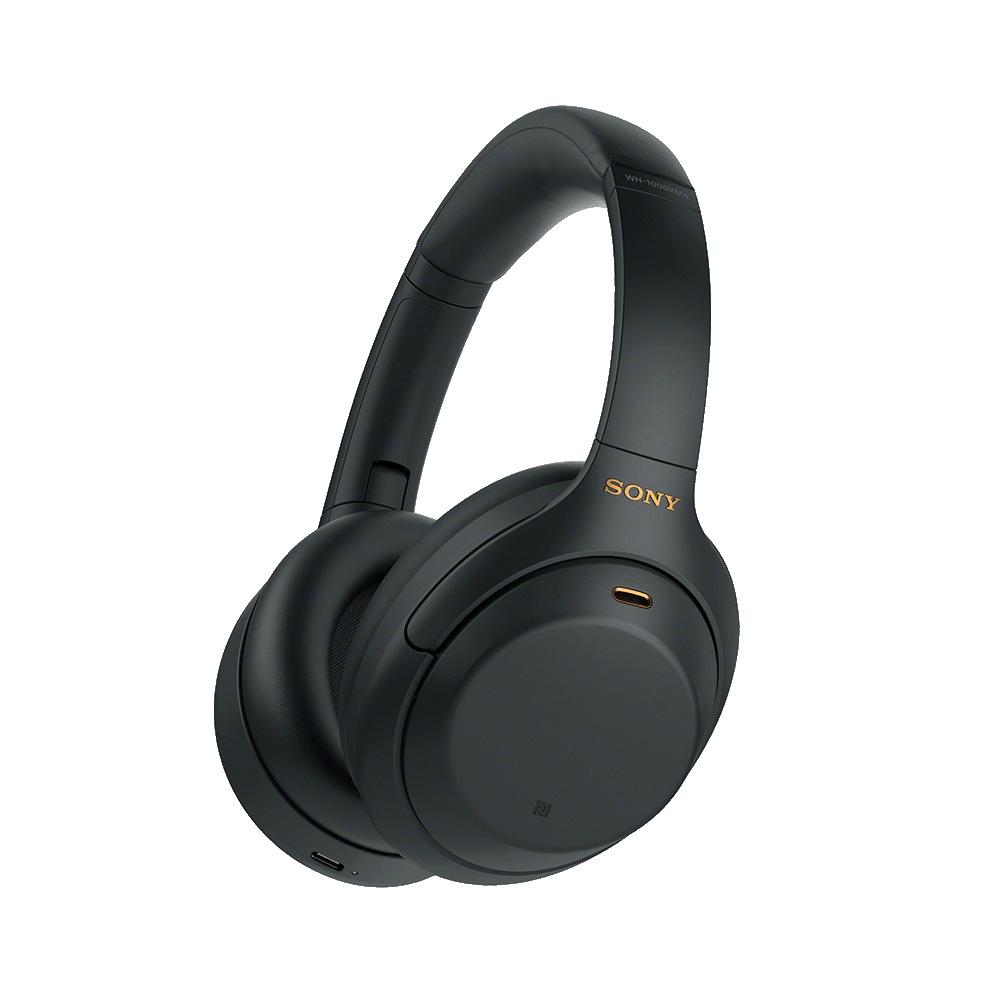
Explore this need in the finder →The Sony WH-1000XM4 is a closed, over-ear Bluetooth headphone with active noise cancellation and two distinct 3.5 mm cable modes. Sony documents noise cancellation when the headset is powered on and connected by cable, plus passive playback when it is switched off. That distinction makes this model relevant to people choosing between wireless convenience, powered quieting and a battery-free analog fallback. This assessment is about Sony’s US black WH-1000XM4 listing; Sony's catalog also names a separate WH-1000XM4C “M4 2nd Gen,” which is not silently treated as the same configuration.
What the published specification says
Sony's US specifications list Bluetooth 5.0, SBC/AAC/LDAC codec support, a 254-gram weight and up to 30 hours of continuous music with noise cancellation on or 38 hours with it off. The stated charge time is about three hours. Those values are useful for comparison, but Sony's “up to” figures are maximum ratings, not a battery test or a promise about a long flight. Battery age, calls, volume, features, environment and codec can change actual use time. The next named generation, WH-1000XM5, is listed with Bluetooth 5.2 and the same headline 30-hour ANC-on rating, while its ANC-off maximum is 40 hours. Sony's specs also describe the XM5 at about 250 grams. Those are verifiable generation differences, not evidence that one pair sounds better, cancels more noise or fits more comfortably. This review does not include an independent listening, cancellation or battery comparison.Two-device connection, with a codec caveat
Sony documents a two-device Bluetooth connection for a phone and computer. The setup uses the Sony companion app—called Headphones Connect in the older guide, now Sony | Sound Connect—then pairs both hosts and enables the two-device option. The manual describes playback switching rather than mixing: the headphone connects to both, but audio plays from one source at a time. There is an important technical tradeoff: Sony's guide says LDAC cannot be used while two devices are connected simultaneously; the codec changes to AAC or SBC. That does not make multipoint unsuitable, but it matters to a listener whose priority is LDAC. A computer, phone or operating system can also shape how reliably audio hands off. Verify the codec and switching behavior you actually need rather than treating “multipoint” as two-stream audio.Powered cable and passive cable are different plans
A 3.5 mm cable provides a useful alternative when Bluetooth is unwanted or unavailable. With the WH-1000XM4 switched on, Sony documents noise-cancelling and ambient-sound functions during cable listening. When switched off, music can still play passively through the cable, but ANC is unavailable. Sony's guide says Bluetooth is not active in cable listening, and the phone microphone is used for calls in the wired arrangement. The USB Type-C lead is listed for charging; the sources used here do not establish USB digital audio input. Sony's US package list includes a carrying case, headphone cable, USB cable and an in-flight entertainment plug adapter. Check the actual offer's box contents rather than assuming every regional listing includes the same parts, especially if an aircraft adapter is important to your trip.What the evidence cannot settle
A 254-gram specification cannot tell an individual how the ear pads seal, how much pressure the headband creates, whether glasses disturb the seal, or whether the pads get warm during a long session. Nor does the existence of ANC establish the amount of sound a particular wearer will hear. Sony's help material explains that cancellation varies with fit and is more effective for some low-frequency sounds than for voices or other higher-frequency sounds. That guidance is not a model-versus-model test result. The XM4 is an older generation than the XM5 and XM6, but the separate US product and support pages still identify the original WH-1000XM4 model in black. Do not confuse it with the distinct WH-1000XM4C listing: the similar name is not enough to establish identical package contents or configuration. Before buying, verify the model suffix, black finish, included cables and case, any needed aircraft adapter, the seller's return terms, and whether you prefer LDAC or multipoint. If fit or the degree of quiet is decisive, try the exact pair under a suitable return policy. This is a source-based review, not a report of ownership, hands-on use, personal fit, measured cancellation, listening tests or customer experience. It makes no claim about current price, stock or a recall determination.Key specifications
Key details at a glance
| Fit | Over-ear / around-ear |
|---|---|
| Active noise cancellation | Yes |
| Maximum continuous music playback (ANC on) | 30 hours |
| Maximum continuous music playback (ANC off) | 38 hours |
| Headset weight | 254 g |
| Bluetooth version | 5.0 |
| Bluetooth audio codecs | SBC / AAC / LDAC |
| Simultaneous Bluetooth devices | 2 |
| Analog audio input | 3.5 mm stereo mini jack |
| Analog cable included | Yes |
| Passive analog playback with headset off | Yes |
| Approximate charge time | 3 hours |
| In the box | Carrying case / Headphone cable / USB Type-C cable / Plug adapter for in-flight entertainment |
Use the exact model’s instructions for operating limits, supplied equipment and version differences.
Sources for this review
Sources for this assessment
- Sony WH-1000XM4 Wireless Noise Cancelling Headphones | Black (US)
- Sony USA WH-1000XM4 specifications
- Sony USA WH-1000XM4 support page
- Sony WH-1000XM4 Help Guide: operating instructions
- Sony WH-1000XM5/B product page, for published generation comparison
- Sony USA WH-1000XM5 specifications, for published generation comparison
- Sony Store NZ WH-1000XM4 Wireless Noise Cancelling Headphones (Black), manufacturer image source
Check this model against your routine
Use the finder to test documented connection, ANC and battery requirements together. A match is not proof of personal comfort or measured quiet.