
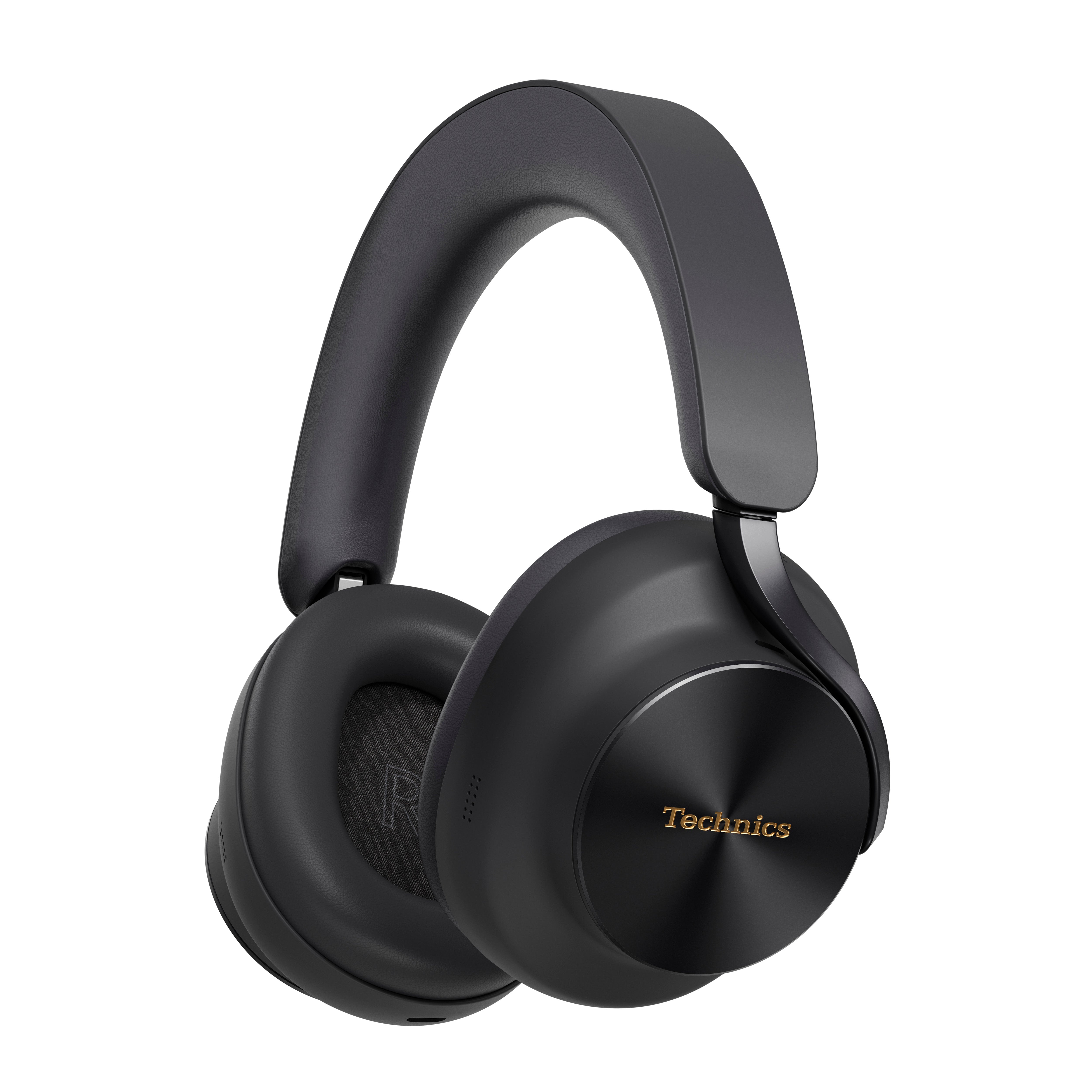
Your needs, this model
Does it fit your priorities?
Can the EAH-A1000 keep noise cancellation on when I use a 3.5 mm source?
Yes, Panasonic's U.S. manual describes the USB-C-to-3.5 mm audio cable and instructs you to turn the headphones on; its specifications rate about 30 hours for ANC-on wired playback. The cable disconnects Bluetooth, and this rating is separate from the 45-hour AAC/SBC Bluetooth maximum. Confirm the exact cable and source jack on the offer you are considering.
Explore this need in the finder →Can I keep a phone and laptop connected at once?
Panasonic documents multipoint for up to three Bluetooth devices. You select the number of connections in the Technics Audio Connect app; the feature lets you switch between connected devices rather than mix their audio. A separate LE Audio-prioritized setting disables multipoint, so check whether your source and chosen codec use that route.
Explore this need in the finder →Will the audio cable work if the battery is empty or the headphones are off?
Do not count on passive power-off playback. Panasonic's U.S. instructions say to press the power button after connecting the audio cable, and the ANC-on wired runtime is listed separately at approximately 30 hours. The sources reviewed do not establish a battery-free analog arrangement; this differs from the earlier EAH-A800 review, whose manual documents passive cable playback.
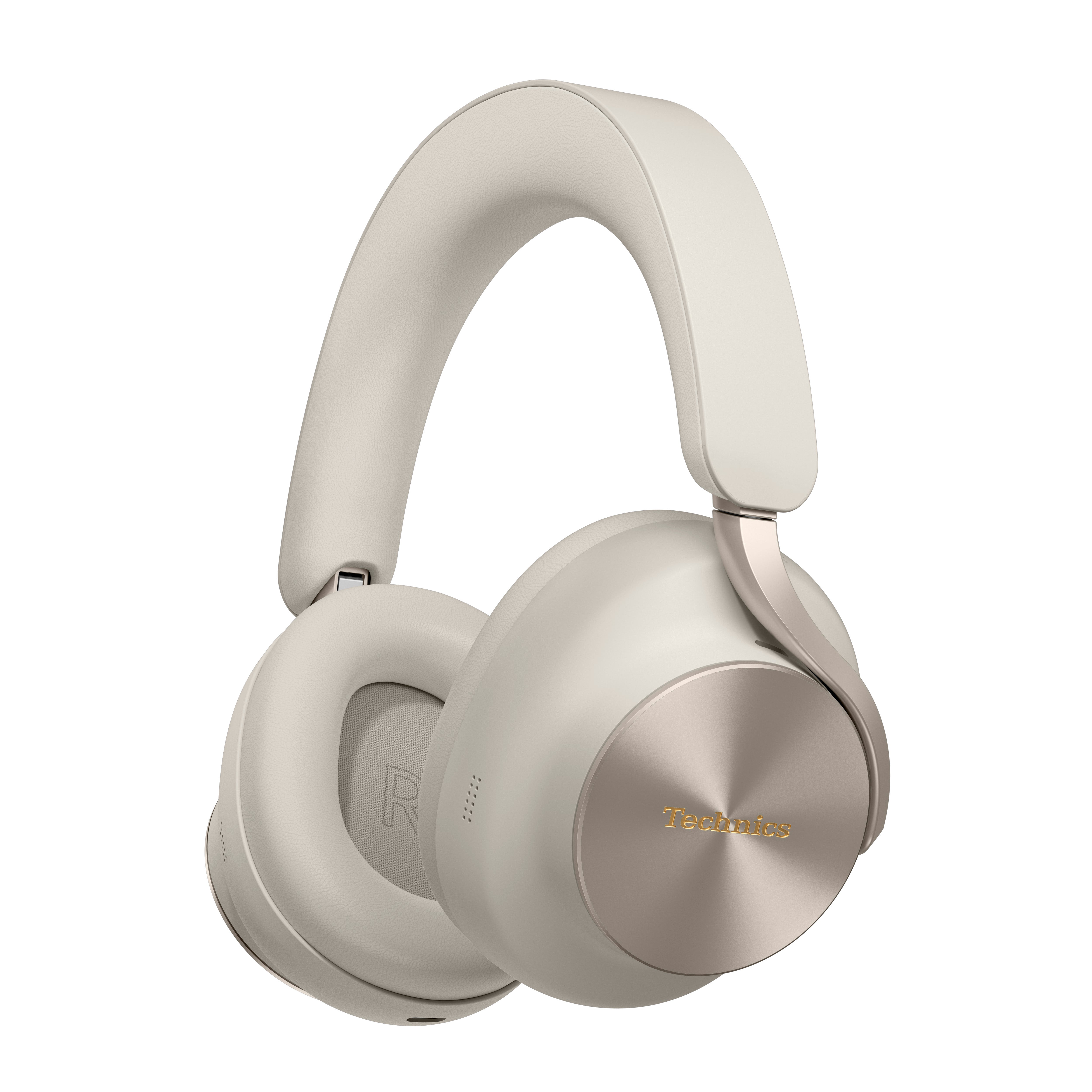
Explore this need in the finder →Assessment scope: This is a source-based review of the U.S. Black Technics EAH-A1000-K, not a hands-on test. Technics calls the page “True Wireless Noise Cancelling Over-Ear Headphones”; here, “over-ear” is the useful category cue, while “true wireless” is the manufacturer's product wording. The same product page has a distinct Platinum Greige EAH-A1000-S sibling, shown below as a separate finish rather than a different functional model.
One name covers several listening routes
EAH-A1000 is a current U.S. over-ear ANC model from Technics. The manual describes four Bluetooth codecs—SBC, AAC, LDAC and LC3—and the U.S. product page highlights adaptive noise cancellation, ambient listening and a 40 mm Magnetic Fluid Driver with an SST Edge and carbon-fiber diaphragm. These are manufacturer specifications and design descriptions, not independent listening, fit or attenuation measurements. The manual lists the headset at about 306 g without its cable, which is a packing comparison rather than a comfort verdict.
The useful distinction is not a simple wireless-versus-wired label. The A1000 has Classic Bluetooth, a separate LE Audio mode, USB-C digital audio and an included USB-C-to-3.5 mm analog cable. Each route has different interactions with power, ANC and multipoint. The matcher therefore treats them as separate operating plans instead of borrowing a maximum from one connection and applying it to another.
Rated battery life changes with codec and cable
Panasonic's U.S. manual gives approximately 45 hours of playback with ANC on using AAC or SBC. Its separate figures are approximately 40 hours with ANC on for LDAC and LC3, and about 30 hours for the wired connection with ANC on. ANC-off values are different again: up to 90 hours for AAC/SBC, 80 for LDAC/LC3 and 60 wired. The manual also lists about four hours of ANC-on AAC listening after a 15-minute charge and about 3.5 hours for a full charge under its stated conditions.
For a wired trip, the 30-hour ANC-on figure is the relevant published maximum—not the 45-hour Bluetooth headline. Likewise, choosing the LE Audio/LC3 mode does not keep the AAC/SBC figure. The manual warns that runtime can be shorter depending on conditions. These are maker ratings, not our measurement or a prediction for a used headset with battery wear.
Powered analog ANC is a real difference from passive cable backup
The included audio lead connects USB-C at the headphone to a 3.5 mm source. Panasonic's U.S. instructions say to connect the cable and turn the headphone on. In that powered arrangement, its specification lists ANC-on playback for about 30 hours. Connecting the audio cable disconnects Bluetooth, so this is not a way to keep a phone link active in the background. Cable mode also removes several headset controls and all phone-call functions described in the manual; expect to manage playback at the source.
This is a particularly important contrast with the earlier Technics EAH-A800: its manual documents ordinary passive cable playback when power is off or depleted, while the A1000 audio-cable instructions require power-on. The A1000's wired ANC capability is valuable for a source with only an analog jack, but it does not replace an emergency, battery-free cable fallback. Do not infer passive playback from the presence of a cable or jack.
Three-device multipoint has a codec boundary
Technics says the A1000 can keep as many as three Bluetooth devices connected and switch among them. Panasonic's support instructions explain that the number is selected through the Technics Audio Connect app. That is convenient for a phone, tablet and computer, but it is device switching—not a promise to mix several audio streams. If a two-device setup is essential, plan time for app configuration and confirm each source behaves as expected.
There is a documented exception: turning on “Prioritize LE Audio” disables multipoint and resets the selected connection count to one. The manual also says LDAC cannot be used when connected over LE Audio. For the two-device finder match, use a Classic Bluetooth arrangement rather than combining LC3 with multipoint. The manual's separate LC3 and multipoint specifications are not evidence that both work together in that LE Audio mode.
USB audio and the exact package
The digital USB-C route is distinct from analog. Panasonic's manual describes USB-C-to-USB-C audio from a computer or compatible device, requires the headset to be on, and says USB audio disconnects Bluetooth. Technics describes USB Audio as lossless digital playback, but the sources reviewed do not publish an ANC-on runtime for USB audio, so none is assigned here. A USB-C-shaped port alone would not prove audio; this model's manual does.
The U.S. manual lists a USB cable, an audio cable and a carrying case in its accessory section, and its operating instructions call the two cables included. The current product page does not provide a full seller-facing box checklist. Confirm the exact EAH-A1000-K or EAH-A1000-S marking, the analog lead, case and charging cable with the specific offer before purchase. This avoids assuming that every reseller or returned package has the original contents.
Who should shortlist the A1000
On paper, the A1000 makes the most sense for someone who wants ANC to survive a 3.5 mm cable connection, values a USB digital route, or needs Classic Bluetooth multipoint across more than two devices. Its route-specific runtime documentation is unusually helpful, as long as the buyer keeps the AAC/SBC, LDAC/LC3 and wired ratings separate. For comparison, the A800 has a higher published AAC/SBC ANC-on ceiling and documents passive cable playback, while the A1000 adds powered wired ANC, USB-C audio and up-to-three-device Classic multipoint. Neither spec sheet proves which one will sound quieter or fit more comfortably on a particular head.
The tradeoffs are setup complexity, a powered rather than passive cable workflow, and a headset weight that cannot predict pressure or heat. The product page's comfort language is not evidence of a universal fit, and the ANC materials provide no independent decibel test. Before choosing, identify the source connection, check whether it uses Classic Bluetooth or LE Audio, confirm package contents and allow for a returnable fit check. No personal use, test result, price, stock claim or customer review summary is asserted here.
Key specifications
Key details at a glance
| Fit | Over-ear / around-ear |
|---|---|
| Active noise cancellation | Yes |
| Maximum continuous music playback (ANC on) | 45 hours |
| Maximum continuous music playback (ANC off) | 90 hours |
| Headset weight | 306 g |
| Bluetooth audio codecs | SBC / AAC / LDAC / LC3 |
| Simultaneous Bluetooth devices | 3 |
| Analog audio input | Usb-c audio input via the included usb-c-to-3.5 mm cable |
| Analog cable included | Yes |
| Approximate charge time | 3.5 hours |
| In the box | USB-C to USB-C cable / USB-C to 3.5 mm audio cable / Carrying case |
Use the exact model’s instructions for operating limits, supplied equipment and version differences.
Sources for this review
Sources for this assessment
- Technics U.S. EAH-A1000 product page, selected Black SKU EAH-A1000-K
- Technics EAH-A1000 U.S. Owner's Manual
- Panasonic U.S. support guide for Technics EAH-A1000
- Panasonic U.S. support: connect EAH-A1000 to multiple devices using multipoint
- Panasonic U.S. support: use the EAH-A1000 with an audio cable
- Panasonic U.S. support: use the EAH-A1000 with a USB cable for audio
- Technics U.S. launch announcement for EAH-A1000
Check this model against your routine
Use the finder to test documented connection, ANC and battery requirements together. A match is not proof of personal comfort or measured quiet.